
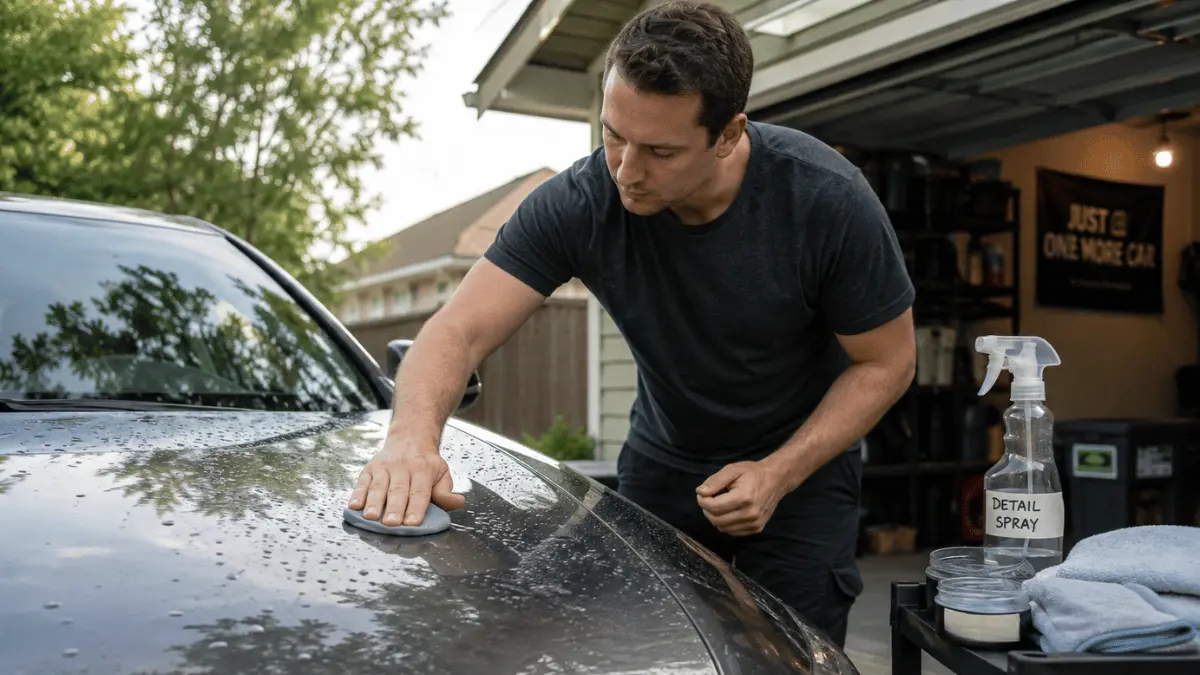
A clay bar is one of the most effective tools in car detailing for removing bonded contaminants from your paint – the kind of grime that regular washing simply can’t touch. If you’ve ever run your hand over a freshly washed car and it still felt rough or gritty, that’s contamination, and a clay bar treatment is the solution.
In this guide, I’ll cover everything you need to know: what a clay bar is, the different types available, how to use one step by step, when your car actually needs this clay treatment, and whether it’s worth the effort (spoiler: it absolutely is).
Key Takeaways:
- A clay bar is a resin-based compound used to remove bonded contamination from car paint, glass, and metal.
- The process is often called clay bar treatment (or simply clay treatment) and is essential in car detailing.
- The goal is to remove all surface contaminants and make the paint as smooth as glass before applying wax, sealant, or ceramic coating.
- At some point, every car needs a clay bar treatment. I recommend doing it at least once a year — more often if you drive daily or park outside.
What Is Clay Bar?

Before we proceed into the details of the functioning or usage, it is first necessary to understand what a clay bar actually is and why it matters for your car.
A clay bar is a form of natural or synthetic engineered resin compound specifically made to lift and remove contamination from the surface of your vehicle, preparing it for protection.
The contamination we’re talking about includes:
- Bug splatter and bird droppings
- Industrial fallout
- Brake dust
- Rail dust
- Tree sap
- Honeydew
- Bitumen tar
- Paint overspray
It is quite similar to the clay we once used to play with as kids to mold out shapes. However, automotive detailing clay is designed in such a way as to make it more elastic for added durability and usability as a part of an effective clay treatment.
In addition to this, an automotive clay bar is strong enough to counteract any contamination, all the while keeping the suspended particles within itself.
Related: Does Clay Bar Damage Car Paint
This allows the clay bar to contain the contamination without letting it damage or transfer to the vehicle’s surface.
3 Different Types of Clay Bar

Let’s explore the three clay bar types: the standard clay bar, the clay towel, and the clay mitt.
- 1. Standard Clay Bar. The standard clay bar is the original go-to for auto enthusiasts and professionals alike. It’s a pliable, resin-based compound that feels a bit like putty. This type of clay bar comes in various grades, from fine to heavy, designed to tackle different levels of contamination. It requires kneading and reshaping during use to expose a clean surface and prevent scratching. Ideal for those who prefer a hands-on approach, the standard clay bar offers a time-tested method for achieving a pristine finish.
- 2. Clay Towel. The clay towel is a more recent innovation that combines the effectiveness of a clay bar with the convenience of a microfiber towel. It features a microfiber towel base with a polymer rubber layer that grabs contaminants from the paint. The clay towel is durable, easy to handle, and can cover larger areas more quickly than a standard clay bar. It’s also easier to clean and can be used multiple times, making it a cost-effective choice for regular detailers.
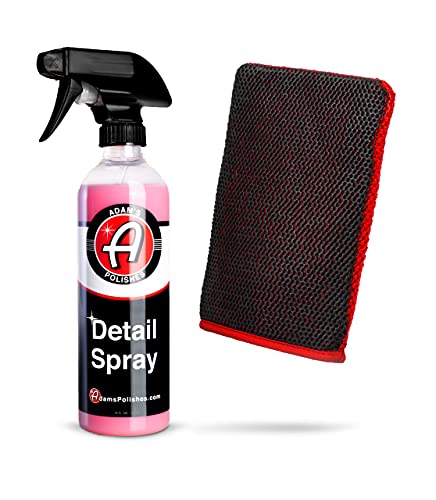
- 3. Clay Mitt. For those who want the best of both worlds, the clay mitt is the answer. It merges the malleability of a clay bar with the ease of a mitt design. You slip it on your hand like a glove, which gives you more control and reduces hand fatigue during extended use. The clay mitt is excellent for those who are looking for a user-friendly, efficient way to decontaminate their vehicle while enjoying the tactile feedback of traditional claying.
What Does a Clay Bar Do for Car Paint?
This is the question I get asked most often, so let me be clear: a clay bar removes contamination that has bonded to your paint’s surface and cannot be removed by normal washing.
After washing your car, your paint might look clean, but run your hand over it — if it feels rough, gritty, or bumpy, there are microscopic contaminants embedded in the clear coat. These include iron particles from brake dust, industrial fallout, tree sap residue, and road tar.
A clay bar glides over the paint and physically pulls these particles out of the surface, leaving behind paint that feels genuinely glass-smooth. This is important because:
- Wax, sealants, and ceramic coatings bond much better to decontaminated paint
- Polishing is safer and more effective when contaminants aren’t being dragged across the surface
- Your car looks noticeably better — contamination dulls the paint by disrupting how light reflects off it
The clay bar doesn’t correct scratches, doesn’t add protection, and doesn’t replace polishing. It does one thing, and it does it exceptionally well: it strips away everything that doesn’t belong on your paint.
Benefits of Clay Bar Detailing for Your Car
Here are the most important benefits of clay bars for your car.
How to Tell If Your Car Needs a Clay Bar Treatment
To identify whether your vehicle’s surface is contaminated or not, you first have to wash your car. After washing your car, you’re ready to test the paint.
The Plastic Bag Test
- Take a regular plastic sandwich bag and place it over your hand. Softly run your fingertips over the paint surface. The thin plastic amplifies any texture, making it much easier to feel contamination than with bare fingers.
While doing so, keep in mind that the surface has been washed and dried completely.
- If your surface is as smooth as a glass surface, then your vehicle’s paint is not contaminated.
- However, if the surface is not smooth and feels gritty, coarse, or bumpy, then it is a clear indication that your paint has been contaminated or that it has paint overspray, and that’s a clear reason to use a clay bar.
Here, the clay bar treatment comes into play. Before proceeding with wax or any other protection, the contamination needs to be removed from the surface using a clay bar.
Other signs your car needs clay treatment:
- Your drying towel drags or catches on the paint instead of gliding smoothly
- You can see tiny orange or brown specks embedded in the paint (iron fallout)
- The paint looks dull even after a thorough wash
- Your wax or sealant doesn’t seem to last as long as it used to
- Water doesn’t bead or sheet off the surface like it should
How Does Clay Bar Work

Imagine a gentle eraser that glides over your car’s paint, picking up all the invisible nasties that a sponge can’t. That’s what a clay bar does – it’s like a magnet for the tiny particles that stick to your car’s surface.
How It Cleans Contaminants
When you glide the clay bar over your car, it doesn’t just push the dirt around. Instead, it traps particles inside the clay. Think of it as a sticky trap for all the grime that’s invisible to the naked eye. And don’t worry – it’s a one-way trip for the dirt. Once the clay grabs it, it won’t let go, which means those contaminants won’t find their way back onto your car.
The Right Way to Slide
Now, the clay bar isn’t a fan of dry surfaces. It needs something slippery so it can skate across your paint without leaving a mark. That’s where a good lubricant comes in. While some folks might tell you water is enough, it’s not the best partner for your clay bar. Instead, use a special clay bar lubricant or a quick detailer spray. These are like ice on a rink for your clay bar, letting it dance over your car’s surface, picking up dirt without any scratches.
Safe for Your Car
There’s a rumor that clay bars are like sandpaper for your paint, but that’s not true. When used correctly, with plenty of lubricant, a clay bar is as gentle as a feather on your car’s clearcoat. It’s all about the technique – gentle and steady wins the race.
A Note on Protection
One thing to remember: if you’ve got any wax or sealant on your car, the clay bar is going to strip it away along with the dirt. It’s not picky; it cleans off everything. So, if you’ve applied a protective coating, you’ll need to put on a fresh layer after you’re done claying.
Related: What To Do After Using Clay Bar
How to Clay Bar Your Car — Quick Overview
The clay bar process is simple in concept: wash the car, lubricate a small section, glide the clay over it with gentle back-and-forth motions, fold the clay to expose a fresh surface, wipe, and move on to the next section. The key rules are to never clay a dry surface, never press hard (let the clay do the work), and throw the clay away immediately if you drop it on the ground.
For the full step-by-step walkthrough, including how to combine clay bar treatment with chemical decontamination using an iron remover for the best results, check out my complete guide:
→ How to Clay Bar a Car — A Full Paint Decontamination Guide
That guide covers the exact process I use, in the exact order — chemical decontamination first, then clay bar. It’s the most thorough approach and the one I recommend to both beginners and experienced detailers.
How Often Should You Clay Bar Your Car?
This is one of the most common questions I get, and the answer depends on your driving habits and environment. Here’s a general guideline:
- Once a year is enough for most cars that are garaged and driven only occasionally.
- Every 6 months is ideal for daily drivers or cars that are parked outside regularly.
- Every 3–4 months may be necessary if you drive in urban or industrial areas, near construction zones, or on highways with heavy traffic.
The best way to decide is to simply do the plastic bag test described above. If your freshly washed paint feels rough, it’s time for a clay bar treatment — regardless of when you last did it.
One thing to be aware of: over-claying can cause micro-marring on your paint over time. This clay treatment is mildly abrasive by nature, so don’t do it more often than necessary. Always use a fine-grade clay bar for regular maintenance, and save medium or heavy-grade clay for severely contaminated paint.
Factors that increase how often you should clay:
- Parking outside under trees (tree sap, bird droppings, pollen)
- Living near industrial areas, airports, or railroads
- Highway commuting (increased brake dust exposure)
- Coastal areas (salt spray accelerates contamination bonding)
- Not having any paint protection (wax/sealant/coating) applied
What Causes Paint Contamination?
Understanding what contaminates your car’s paint helps you prevent it and decide how often your car needs a clay bar treatment.
Rail Dust. Your vehicle becomes subject to rail dust every time it is parked in the vicinity of a railroad. The friction produced by train wheels and the railroad tracks releases tiny metal particles that settle on nearby surfaces.
Brake Dust. When the brake is applied, friction between the brake pads and the rotor creates tiny particles of bare metal that disperse into the environment and get stuck on the vehicle’s surface. Vehicles that regularly drive on the highway are more prone to this kind of contamination.
Industrial Fallout. As a byproduct of industrial waste, tiny, strong, and harsh particles are released that can contaminate your vehicle’s painted surface. If you live near factories, power plants, or construction zones, your car is at higher risk.
Tree Sap and Organic Matter. Parking under trees exposes your car to sap, pollen, bird droppings, and insect residue. These organic contaminants bond to the paint quickly, especially in warm weather, and can cause permanent etching if left untreated.
Road Tar and Asphalt. Driving on freshly paved or patched roads can flick tiny tar droplets onto your lower panels and wheel arches. Tar bonds extremely well to paint and is almost impossible to remove with regular washing — but a clay bar handles it easily.
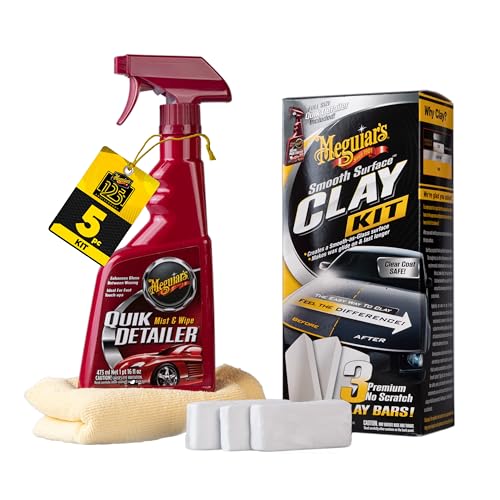
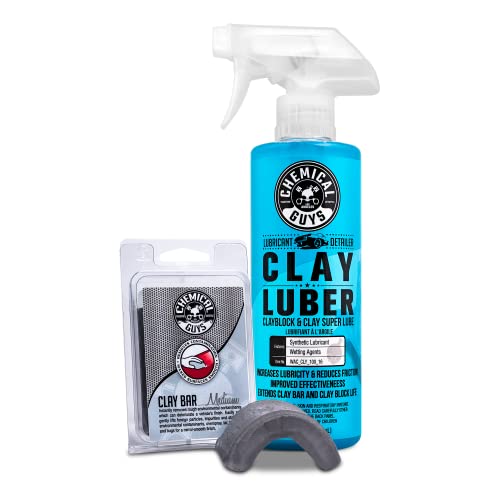
Best Clay Bar Kits for Beginners
If you’re just getting started with clay bar detailing, a complete kit is the easiest way to get everything you need. Here are the products I recommend:
Frequently Asked Questions About Clay Bars
Yes, you can reuse a clay bar multiple times. After each section, fold the clay to expose a clean surface, and store it in its original packaging or a sealed plastic bag with a little lubricant sprayed on it to keep it moist. A single clay bar can typically last for 3–5 vehicles, depending on how contaminated the paint is. However, once the clay is completely saturated with contaminants (dark throughout with no clean surface left when folded), it’s time to discard it.
Yes, clay bars work great on glass and headlights. They can remove water spots, wiper marks, and bonded contamination from windshields, side windows, and headlight lenses. Just use the same technique — plenty of lubricant and gentle, straight-line motions. You’ll be surprised at how much cleaner your glass feels afterward.
No, a clay bar does not remove scratches. Clay bars only remove contaminants that sit on or are bonded to the surface of the paint. Scratches are damage to the clear coat itself, which requires polishing or compounding to correct. However, sometimes what looks like a scratch is actually a line of contamination — in those cases, a clay treatment may make the “scratch” disappear.
Throw it away immediately. Once a clay bar touches the ground, it picks up sand, dirt, and debris that will scratch your paint if you continue using it. This is why I recommend breaking off a small piece to work with instead of using the whole bar — if you drop it, you only lose a small piece, not the entire bar.
Yes, and you should consider it. New cars often sit on transport trucks, dealer lots, and rail cars for weeks or months before they reach you. During that time, they collect industrial fallout, rail dust, brake dust from the transport vehicle, and other contaminants. A gentle clay treatment with a fine-grade clay bar can remove all of this and give your new car the perfect foundation for a paint protection product.
They serve completely different purposes, so it’s not a matter of better or worse. A clay bar removes surface contamination (things bonded to the paint). A polish removes a thin layer of clear coat to correct imperfections like swirl marks, scratches, and oxidation. In a typical detailing workflow, you clay first to decontaminate, then polish if needed, then protect with wax or sealant.
Use either a dedicated clay bar lubricant or a quick detailer spray. Never use plain water — it doesn’t provide enough lubrication and the clay can stick to the paint, causing marring. Most clay bar kits come with their own lubricant. If buying separately, any quality quick detailer spray will work well as a clay lubricant.
For a standard sedan, expect to spend about 45 minutes to an hour for a thorough clay bar treatment. Larger vehicles like SUVs or trucks may take 1–1.5 hours. If the contamination is heavy, it can take longer since you’ll need more passes and will fold or replace clay more frequently. Using a clay mitt can cut this time roughly in half compared to a traditional clay bar.
Bottom Line
Now that you understand what a clay bar is, how to use one on your car, and when your vehicle needs this detailing clay treatment, I suggest that you learn how to do a full paint decontamination — a process where you’ll use your fresh knowledge to remove all contaminants from your car and return its shine to the original.
And if you ask me if a clay bar is worth it, I’d say YES! It’s so far the best tool for removing contaminants from the car paint without damaging the clear coat. Once you feel that glass-smooth finish for the first time, you’ll understand why every detailer considers clay bar treatment an essential step in proper car care.
