
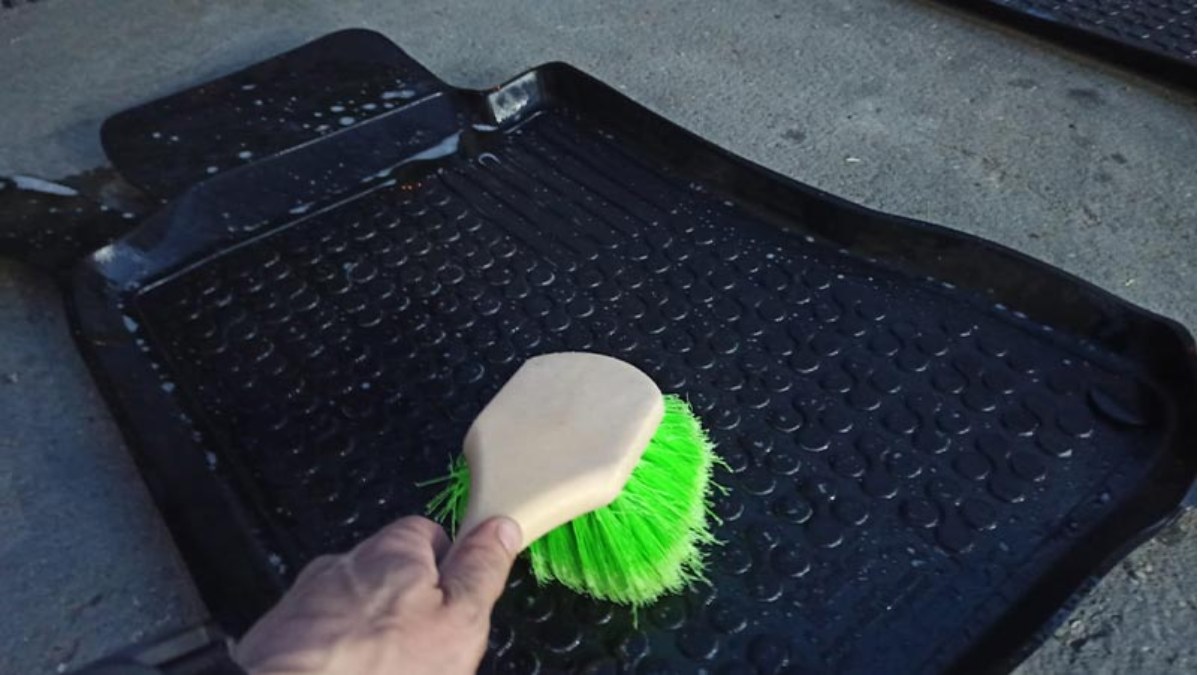
Rubber car mats are pretty simple to clean, but just washing them with a high-pressure washer won’t be enough to make them look like new again, especially if it’s wintertime and mats are full of mud, road salt, and other contaminants. Knowing how to clean rubber car floor mats the right way takes a few extra steps — but the results are worth it.
That’s why I decided to write this guide and show you all the steps I take when cleaning rubber car floor mats. Whether you have standard rubber mats or molded floor liners like WeatherTech, these steps work equally well. And if you’re doing a full deep clean of your car interior, cleaning the floor mats is one of the most important parts.
How To Clean Rubber Car Floor Mats
What you’ll need:
- Pressure washer or a garden hose — a pressure washer works best, but a garden hose with a strong spray nozzle will do the job.
- All-purpose cleaner or degreaser — any automotive APC works. If you don’t have one, dish soap mixed with warm water is a solid backup.
- Stiffer detailing brush or drill brush — you need something stiff enough to scrub the grooves and textured surfaces of rubber mats. A soft brush won’t cut it.
- Non-slippery rubber dressing — this is the key to making your mats look new again. I use 303 Aerospace Protectant.
- A couple of microfiber towels — for drying the mats and wiping off excess dressing.
Step 1: Remove the Mats and Vacuum the Floor
Before you begin, remove the mats from your vehicle. This allows you to access and vacuum the interior floor, removing any loose debris. If you have a good car detailing vacuum, now is the perfect time to use it on the floor area underneath the mats. It’s important to clean the mats outside of the car to avoid dampness and dirt inside your vehicle.
Step 2: Shake Off the Dirt
Take each mat and give it a good shake. Doing this outdoors will help you get rid of the initial layer of dirt and make the washing process more manageable. A firm shake should dislodge most of the dry dirt and debris. For mats with deep grooves, hit them against a hard surface a few times to knock out trapped pebbles and sand.
Step 3: Rinse with a Pressure Washer or Garden Hose
Lay the mats flat on a clean surface, or hang them up if you have hooks. Use a pressure washer to blast away the remaining dirt. If you don’t have a pressure washer, a strong jet from a garden hose can also be effective. Remember to wash both sides to ensure all dirt is removed.
Pay special attention to the grooves and textured patterns — this is where dirt loves to hide and where a strong water stream makes the biggest difference.
Related: Best Pressure Washers For Car Detailing
Step 4: Scrub with an All-Purpose Cleaner
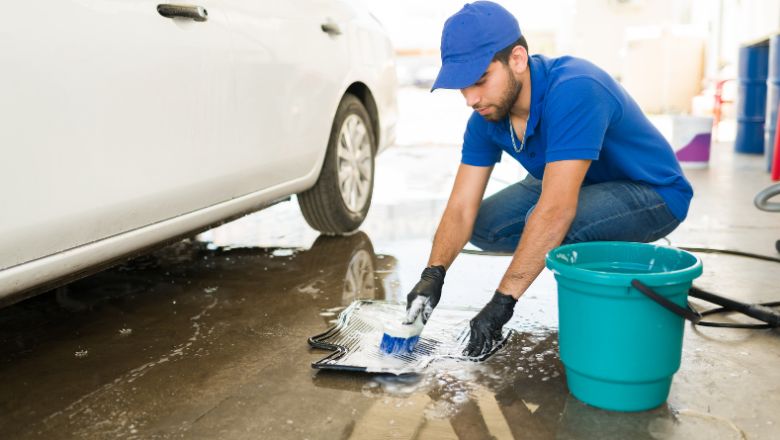
Spray an all-purpose cleaner generously over the surface of each mat and let it dwell for about 20-30 seconds. This gives the cleaner time to break down embedded dirt and grime before you start scrubbing.
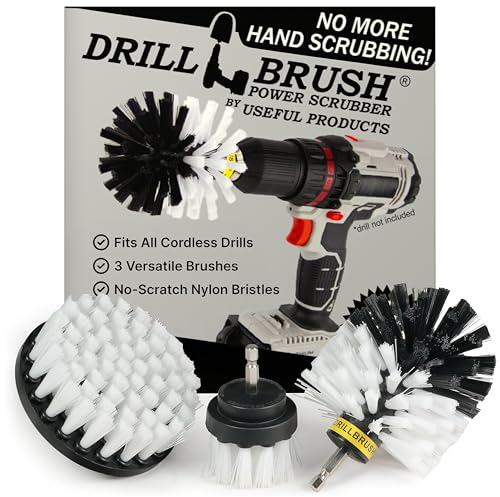
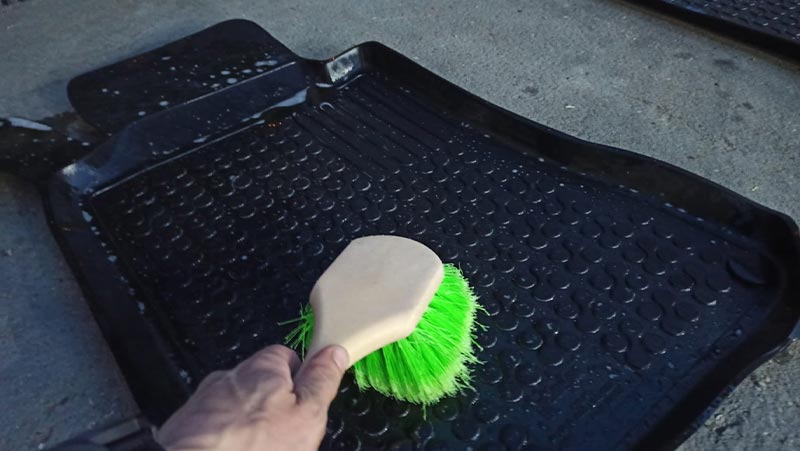
Using a stiff brush, scrub the mats thoroughly, working the cleaner into all the grooves and textured areas. For a deeper clean, a drill brush attachment can be used to save time and effort — just attach it to your cordless drill and let it do the hard work. Once scrubbed, rinse the mats thoroughly until all the cleaner is gone.
Important: Make sure you rinse off all the soap residue. Leftover cleaner can make the mats slippery, which is dangerous when driving.
Step 5: Dry the Mats Completely
After rinsing, use a microfiber towel to absorb excess water and help lift any remaining dirt. Then, hang the mats up to air dry completely. If you’re short on time, a quick blast with compressed air or an air blower can speed up the process.
Do not put wet mats back in your car. This is one of the most common mistakes people make, and it can lead to mold growth and unpleasant odors inside your vehicle.
Step 6: Apply a Non-Slippery Rubber Dressing
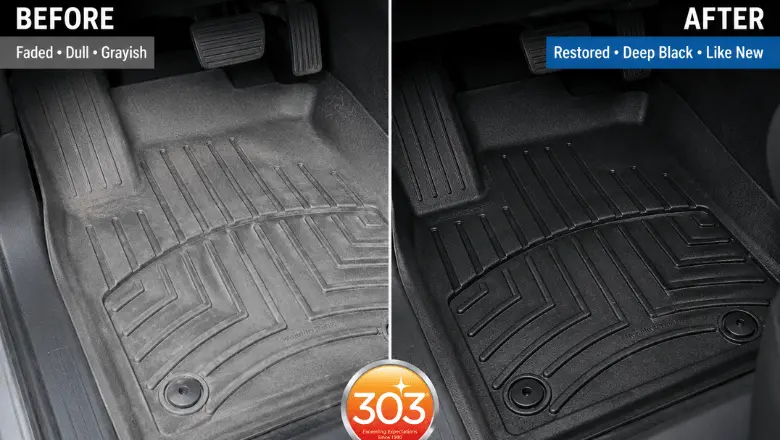
To restore the mats’ original luster and protect them from future dirt and stains, apply a non-slippery dressing. Products like 303 Aerospace Protectant have worked incredibly well for me. Spray the protectant evenly and wipe the mats with a clean microfiber towel to distribute the product and buff off any excess.
The dressing not only makes the rubber look darker and fresher, but it also provides UV protection that prevents the rubber from fading and drying out over time.
Step 7: Reinstallation
Once the mats are dry and treated, place them back in your car. If they have any clips or fasteners, ensure they are secured properly to prevent slipping while driving.
If you like video guides, check out the video below:
How to Remove Tough Stains from Rubber Car Mats
Sometimes, a regular cleaning isn’t enough. Here’s how to deal with the most common stubborn stains on rubber mats:
Road salt stains (white residue): Mix equal parts white vinegar and warm water in a spray bottle. Spray the affected areas, let it sit for 2-3 minutes, then scrub with a stiff brush and rinse. Vinegar dissolves salt buildup effectively and won’t damage the rubber.
Grease and oil stains: Use a dedicated degreaser or a stronger dilution of your all-purpose cleaner. Spray it directly on the stain, let it dwell for a minute, and scrub aggressively with a stiff brush. You may need to repeat this 2-3 times for heavy grease.
Mold or mildew: If you’ve left wet mats in your car too long and mold has started growing, sprinkle baking soda over the affected area and let it sit overnight. Vacuum it off the next day, then clean the mat normally with APC. For severe mold, check out my detailed guide on how to clean mold out of a car.
Scuff marks and shoe marks: These usually come off easily with an APC and a stiff brush. If they’re stubborn, try a magic eraser — it works surprisingly well on rubber surfaces.
How to Make Rubber Car Mats Look New Again
If your rubber mats have become gray, faded, or just look tired, the best way to restore them is to follow the full 7-step cleaning process above, paying special attention to Step 6 — the dressing.
The key to making rubber mats look new again is using the right product. You want something that restores the dark, rich color of the rubber without making the surface slippery. Here’s what works and what doesn’t:
What works:
- 303 Aerospace Protectant — my go-to. Non-slippery, UV-protective, leaves a clean matte finish.
- Water-based rubber dressings — these darken the rubber without adding a slick feel. Look for products specifically labeled as safe for rubber floor mats.
What doesn’t work (and can be dangerous):
- Tire dressings — most tire shines make the surface dangerously slippery. Never use them on floor mats.
- Chemical Guys VRP — great product for other rubber parts, but too slippery for floor mats.
- Silicone-based sprays — they attract more dirt and create a slick surface.
If you’re also looking to restore other rubber parts of your car, I wrote a guide on how to clean and protect rubber trim around car doors and windows that uses a similar approach.
How Often Should You Clean Rubber Car Mats?
This depends on your driving conditions and climate:
- Every 2-4 weeks — if you live in an area with lots of rain, snow, mud, or road salt. Winter driving is especially harsh on rubber mats, and salt can degrade the rubber if left uncleaned. If you’re prepping for the cold season, my guide on how to prepare your car for winter covers everything you need to do.
- Once a month — for normal driving conditions. Even if the mats look clean, dirt accumulates in the grooves and can cause odors over time.
- Every 2-3 months — if you barely drive or live in a dry climate with minimal rain or dirt exposure.
As a general rule: if you can see dirt on the mats, it’s time to clean them. Don’t wait until they’re caked in mud — regular cleaning is faster, easier, and keeps the mats in better condition long-term.
Can You Clean Rubber Car Mats with Household Products?
You absolutely can. While I prefer using a dedicated all-purpose cleaner for the best results, here are some household alternatives that work well in a pinch:
Dish soap + warm water: This is the easiest and most accessible option. Mix a few drops of dish soap into a bucket of warm water, scrub the mats with a brush, and rinse thoroughly. It cuts through most dirt and light grease without damaging the rubber.
Baking soda: Great for removing odors and light stains. Make a paste with baking soda and water, apply it to the stained areas, scrub, and rinse. You can also sprinkle dry baking soda on the mats and let it sit for a few hours before vacuuming it off to neutralize odors.
White vinegar + water: A 50/50 mix of vinegar and water is excellent for dissolving road salt residue and mineral buildup. Spray it on, let it sit for a couple of minutes, scrub, and rinse.
What to avoid: Never use acetone, paint thinner, bleach, or other harsh solvents on rubber mats. These can break down the rubber, cause discoloration, and shorten the lifespan of your mats significantly.
Common Mistakes When Cleaning Rubber Car Mats
When cleaning rubber car mats, there are a few common mistakes to avoid, as they can lead to unsatisfactory results or even unsafe conditions.
Here are some of the most common errors people make:
- Not removing mats from the vehicle: Attempting to clean the mats while they’re still inside the car makes it difficult to clean them thoroughly and can leave dirt on your vehicle’s carpet.
- Only rinsing with water: Rinsing the mats with water alone won’t remove stubborn stains or dirt. It’s essential to use a suitable cleaner and scrub them properly to achieve a deep clean.
- Not drying mats sufficiently: Returning wet mats to your car can lead to mold or mildew buildup and unpleasant odors. Ensure that the mats are completely dry before reinstalling them in your vehicle.
- Using tire dressings on rubber floor mats: Applying tire dressings or slippery products on rubber floor mats is extremely dangerous, as it can create a hazardous slippery surface while driving. Always use a non-slippery dressing specifically designed for rubber mats.
- Using harsh chemicals like acetone or solvents: These can break down the rubber material, cause cracking, and permanently damage your mats. Stick to automotive all-purpose cleaners or mild soap.
- Using hot water: Very hot or boiling water can warp rubber mats, especially thinner ones. Use lukewarm or cold water instead.
FAQ
You can make rubber car mats look new again by cleaning them thoroughly with an APC and a stiff brush, then applying a non-slippery dressing such as 303 Aerospace Protectant. The dressing restores the dark, rich color of the rubber and provides UV protection. Avoid using slippery products such as Chemical Guys VRP or shiny tire dressings — these create a dangerous slick surface on your floor mats.
Rubber floor mats are much easier to clean when compared to cloth mats. While they’re not as popular and appealing as their fabric counterpart, I prefer having them across all my vehicles, especially during the winter. You can simply hose them down, scrub them with a brush, and they’re clean in minutes — something you can’t do with cloth mats.
While you can clean rubber mats only by using a pressure washer, you won’t be able to clean them 100%. Some dirt particles will still be stuck to the mat, especially in the grooves and textured areas, and that’s why I suggest using a brush and all-purpose cleaner to get them fully clean.
Dish soap is a great cleaning solution for rubber car mats if you don’t have an all-purpose cleaner at home. Just mix a few drops with warm water in a bucket, and you’re ready to clean. It cuts through grease and dirt effectively without damaging the rubber.
For most drivers, cleaning rubber car mats once a month is ideal. If you drive in harsh conditions — heavy rain, snow, mud, or salty roads — clean them every 2-4 weeks. At the very minimum, give them a proper cleaning every 2-3 months to prevent dirt buildup and odors.
Yes, a 50/50 mix of white vinegar and water works well for removing road salt residue and mineral buildup from rubber mats. Spray it on, let it sit for 2-3 minutes, scrub with a brush, and rinse. It’s a great natural alternative that won’t damage the rubber.
Any good automotive all-purpose cleaner will work great on rubber car mats. I use a standard APC diluted as directed on the bottle. For heavy-duty cleaning, a degreaser works even better. If you don’t want to buy specialty products, dish soap mixed with warm water is an effective and affordable alternative.
I also invite you to check my thorough guide on deep cleaning a car interior, where you can learn how to clean all other parts of the car interior.
