
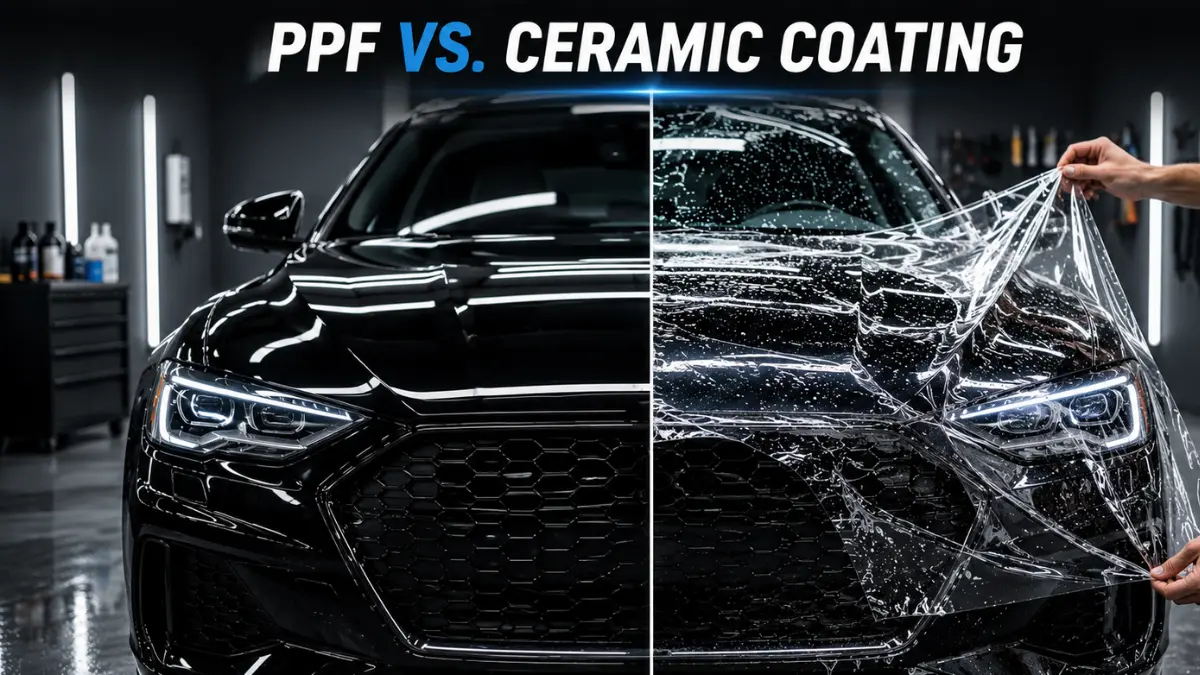
Both ceramic coating and paint protection films are considered top-notch paint protectants for vehicles.
But which one is better? Here’s the short answer: PPF wins when you want the toughest physical protection against rock chips and scratches, while ceramic coating wins when you want a glossy, hydrophobic finish that’s easier to maintain and cheaper to apply. I’ll break down exactly why below, including the pros and cons of each.
By the end, you’ll have a clear understanding of which paint protectant is the perfect choice for you and your vehicle. So, let’s get started on this exciting journey!
Key Takeaways:
- Both ceramic coatings and paint protection film offer great protection and last long.
- Ceramic coatings improve the car’s shine, while PPF doesn’t.
- Paint protection films last longer and are more durable than ceramic coatings.
- Ceramic coatings are cheaper to apply than paint protection films.
- For most people, ceramic coating is a better choice — but PPF is worth it if you drive in harsh conditions.
What’s the Difference Between PPF and Ceramic Coating?
The main difference between PPF and ceramic coating is how they protect your car. PPF is a thick physical film that absorbs impacts like rock chips and scratches, while ceramic coating is a thin liquid layer that chemically bonds to the paint to repel water, dirt, and UV rays and boost shine.
In other words, PPF is armor and ceramic coating is a slick, glossy shield. PPF is thicker and tougher; ceramic coating is thinner and prettier. PPF also tends to last longer, but as you’ll see when we get into how long ceramic coatings last, a good ceramic coating is no slouch either.
Now let’s dig into the details.
PPV vs. Ceramic Coating: Comparison Table
For all of you who are looking for a quick comparison, I’ve made a simple table where you can compare these two products based on various aspects.
| Aspect | Ceramic Coating | PPF | Winner/Draw |
|---|---|---|---|
| Shine | Enhances gloss and depth | Maintains original shine | Ceramic Coating |
| Durability | Great chemical resistance, low physical | Excellent resistance to chemical and physical damage | PPF |
| Cost of application | Lower but still decent | Much higher | Ceramic Coating |
| Hydrophobic properties | Excellent | None | Ceramic Coating |
| Maintenance | Moderate (requires ceramic boosters) | Low (regular washing of the car) | PPF |
| Longevity | 2-5 years | 5-10 years | PPF |
| Self-healing | None | Yes (depending on the brand) | PPF |
| Ease of application | Easier (can be DIY) | More difficult (professional) | Ceramic Coating |
| Paint preparation | Thorough paint prep (wash, clay, polish) | Thorough paint prep (wash, clay, polish) | Draw |
As you can see in the table above, it’s kind of a draw between them. And that’s why you need to take your needs into consideration. By reading the rest of the article, you’ll get a better understanding of why you should pick one above the other based on your budget and your specific needs.
What Is Ceramic Coating?

Ceramic Coating is one of the newest technologies in the auto detailing world. It’s a cutting-edge paint protection solution that offers much stronger protection compared to traditional car waxes and sealants.
Ceramic Coating is a liquid polymer that bonds to your car’s paint, forming a durable, semi-permanent layer of protection. This protective layer not only enhances your car’s appearance but also shields it from various environmental hazards, such as UV rays, bird droppings, and acid rain.
With ceramic coating, your vehicle stays fresh and clean for a longer time, mostly because of the hydrophobic properties of ceramic coatings.
Have you ever seen those fantastic-looking water beads on some car while it’s raining? Well, it’s a sign that they have some paint protection applied, whether it’s wax, sealant, or ceramic coating.
What Is Paint Protection Film (PPF)?

Paint Protection Film, also known as PPF, is a thin yet durable urethane film applied to a car’s surface to protect its paint from scratches, chips, and other potential damages. PPF is designed to absorb the impact of small rocks, debris, and other road hazards, keeping your car’s paint job intact.
Unlike a ceramic coating, PPF is a physical barrier that protects not only against environmental elements but also against minor physical damages.
In essence, PPF is like a shield for your car, preserving its appearance and maintaining its value over time.
Related: Check My Recommended PPFs For Cars
PPF vs Ceramic Coating: The Key Differences
Here are some of the key differences that I’d like to discuss when it comes to the comparison of PPFs and ceramic coatings.
Protection Properties
- Both PPF and ceramic coating protect your car’s paint from UV rays and heat. However, when it comes to physical damage protection, PPF stands out. It offers superior defense against rocks, branches, and other road hazards. PPF is less likely to scratch, ensuring your car remains in excellent condition.
Appearance
- Ceramic Coating has a clear advantage in enhancing the paint’s shine and appearance. While PPF acts as a reliable shield, it doesn’t contribute to the overall look of your car the way ceramic coating does.
Maintenance
- Both PPF and ceramic coating require maintenance to ensure their longevity. Ceramic Coatings make your car easier to clean, but they’re more prone to damage. PPF, on the other hand, may not be as easy to clean, but it has outstanding self-healing properties when activated by heat. This means that lighter scratches can heal themselves, keeping your car’s paint looking flawless.
Cost
- There is a noticeable difference in price between the two options. Ceramic Coatings, while expensive compared to waxes and sealants, are still more affordable than PPF.
Longevity
- With proper maintenance, some of the best ceramic coatings can last up to 5-7 years. On the other hand, PPF can last between 5-10 years, depending on how well you maintain your vehicle and how often you drive. Overall, PPF tends to have a slightly longer lifespan.
PPF vs Ceramic Coating Cost: How Much Does Each Cost?
This is the question I get asked the most, so let’s talk real numbers. Ceramic coating is significantly cheaper than PPF — a professional ceramic coating typically runs a few hundred to a couple thousand dollars, while full-vehicle PPF can cost several thousand.
Here’s a rough breakdown of what you can expect (prices vary a lot by region, vehicle size, and the quality of the product and installer):
- DIY ceramic coating kit: ~$20–$150. The budget-friendly option if you’re willing to do the prep and application yourself.
- Professional ceramic coating: ~$500–$2,000+, depending on the coating tier (entry ceramic, premium ceramic, or the newer graphene coatings) and how many layers.
- Partial PPF (front bumper, hood, mirrors — the high-impact zones): ~$900–$2,000.
- Full-vehicle PPF: ~$4,000–$8,000+.
So dollar for dollar, ceramic coating gives you the most protection for your money, which is a big reason it’s the more popular choice. PPF costs more because you’re paying for a thick physical film and a skilled installer’s time.
If you want to keep costs down, ceramic coating is the way to go — and you can absolutely do it yourself. I’ve put together a guide on the best DIY ceramic coatings if you want to save money, and if you’re on the fence about doing it yourself, my breakdown of DIY vs. professional ceramic coating will help you decide.
If you do go the DIY route, this is the one I’d point most people toward:

What’s Better?
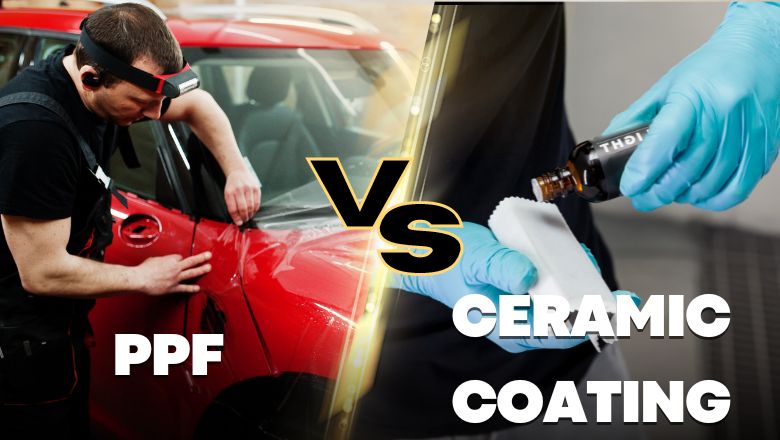
Determining which option is better, PPF or ceramic coating depends on your specific needs and expectations. If you require extreme protection against physical damage, such as rock chips or scratches, then PPF is the clear winner.
However, if you want excellent protection from UV rays, heat, acid rain, bird droppings, and a shiny, glossy appearance for your car, then the ceramic coating is the better choice.
Ultimately, it comes down to your preferences and driving habits. Considering the higher cost of PPF, for most people, the ceramic coating might be a more cost-effective and well-rounded option.
But remember, what’s best for you depends on your unique needs and priorities.
Which Paint Protectant Should You Get
To determine the best paint protectant for your vehicle, consider your specific needs and driving habits. Here are some recommendations based on your requirements.
Apply PPF If:
- You want the ultimate protection against scratches and physical damage. This is ideal for those who frequently go off-roading, visit nature, drive in mountainous terrain, or work in jobs that require heavy-duty vehicle protection, like delivery services.
Apply Ceramic Coating If:
- You desire a great-looking car that’s also easier to clean, has hydrophobic properties on the paint, and offers protection from various harmful elements that may damage the car’s paint. Ceramic coating is perfect for those who want a beautiful, glossy finish and increased resistance to environmental hazards.
Why Using Both Protection Methods Is The Best Choice
For those seeking the ultimate protection and appearance of their car’s paint, combining both PPF and ceramic coating is the best choice. While it may be an expensive option, the results are truly amazing for those who have the budget.
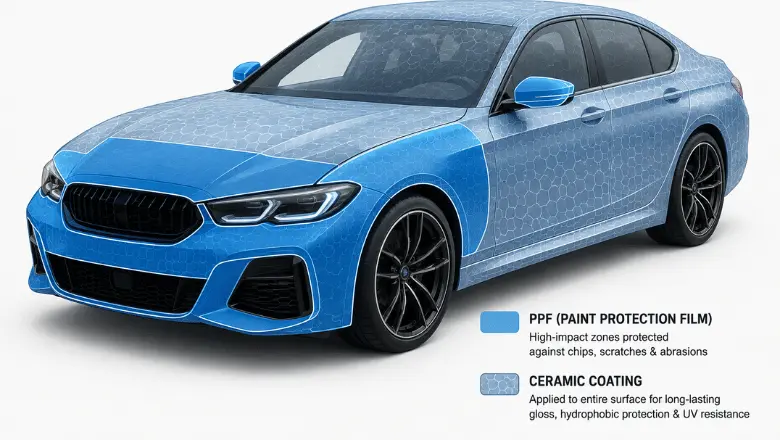
Here’s how the pros usually do it: apply PPF on the high-impact panels — the front bumper, hood, side mirrors, and lower rocker panels, which take the most abuse from rock chips and road debris — and then lay a ceramic coating over the entire car, including on top of the PPF.
Why coat over the film? Because PPF on its own isn’t hydrophobic. Adding ceramic coating on top gives the film water-beading properties, makes it easier to clean, and keeps the gloss consistent across PPF and non-PPF panels. You can read more about this layering approach in this PPF and ceramic coating guide from Chemical Guys.
In essence, using both protection methods provides you with the best of both worlds – the unparalleled physical protection of PPF and the stunning, glossy, easy-to-clean surface that ceramic coating offers. It’s not overkill; the two genuinely complement each other. If you want the deeper dive on the film side of the equation, check out the pros and cons of PPF before you commit.
Frequently Asked Questions
Yes, you can — and you should. Applying ceramic coating over PPF adds hydrophobic, water-beading properties that the film doesn’t have on its own, makes the surface easier to clean, and keeps the shine consistent across the whole car. It’s the most popular way to combine the two.
PPF lasts longer. Quality paint protection film typically lasts 5-10 years, while most ceramic coatings last 2-5 years (with premium coatings reaching 5-7 years). PPF is a thicker, physical layer, so it simply holds up longer than a thin liquid coating.
PPF is worth it if you drive in conditions with a lot of physical hazards — highways with gravel, mountain roads, off-roading, or if you own a high-end or brand-new car you want to keep flawless. For everyday city driving, a ceramic coating usually gives you better value for the money.
No, not really. Ceramic coating is excellent against chemical and UV damage and light wash-induced scratches, but it’s too thin to stop a rock chip. If rock-chip protection is your main concern, you need PPF, not ceramic coating.
Absolutely. The standard approach is PPF on the high-impact front panels (bumper, hood, mirrors) and a ceramic coating over the entire vehicle, including on top of the film. This gives you physical impact protection where you need it and a glossy, hydrophobic finish everywhere.
Quality PPF is designed to be virtually invisible and maintains your car’s original finish. It comes in gloss (clear) and matte options. Unlike ceramic coating, though, it won’t add extra gloss or depth — it preserves the look you already have rather than enhancing it.
Final Words
In my opinion, both Paint Protection Film (PPF) and Ceramic Coating have their unique advantages, and choosing the right option depends on your specific needs and preferences. If budget permits, combining both methods can give you the ultimate protection and appearance for your car’s paint.
If you want to learn more about each option, check out my other articles, where I delve deeper into the benefits of PPF and the advantages of ceramic coatings.
By understanding these paint protectants better, you’ll be able to make the most informed decision for your vehicle.
