
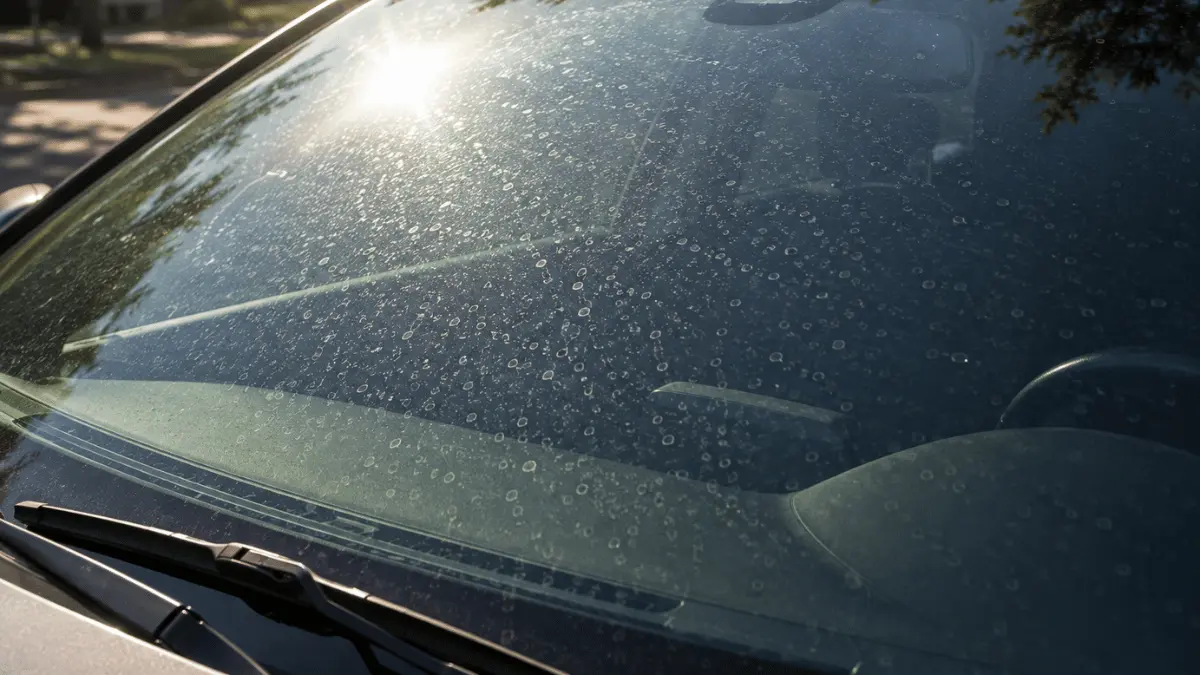
My car has a lot of chrome parts, and water spots appear there all the time, so I have to remove them at least once a year. Over the years, I’ve tried numerous water spot removers — some were great, some were a waste of money.
In this guide, I’m sharing my list of the best water spot removers for cars, covering products for paint, glass, chrome, and even boats and RVs. Whether you’re dealing with light mineral deposits or stubborn hard water stains that won’t budge, I’ve got a pick for you. If you want a deeper dive on techniques, check out my full guide on how to remove water spots from your car.

Best Water Spot Removers For Cars: My Top 5 Picks
If you’re looking for detailed information about the best water spot removers, here you can find all the important info to make sure you pick a product that will fit both your needs and your budget.
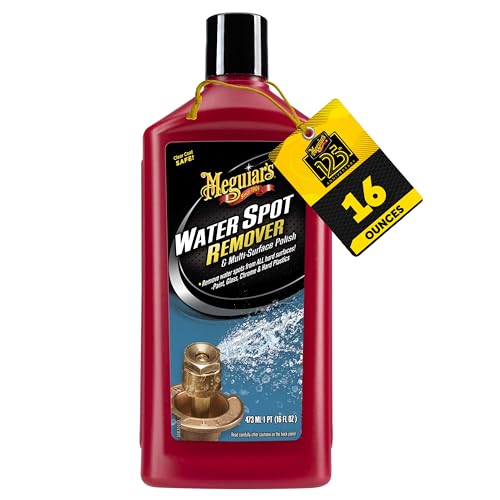
1. Meguiar’s A3714 Water Spot Remover
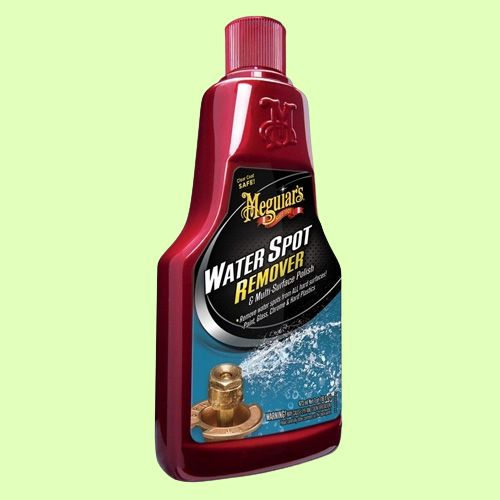
Meguiar's Water Spot Remover is my no. 1 choice when it comes to highly effective but safe water spot removers. It’s safe to use on car paint, glass, chrome, hard plastic, and all metal surfaces. However, you shouldn’t use it on flat, matte, or satin finishes.
The thing I like the most is it also acts like a light compound, meaning that while removing water spots from your vehicle, you’ll also enhance the paint clarity because it’ll clear the paint, making it shinier.
It can be applied by hand (I recommend doing it this way) or by dual-action polishers. If you’re extremely experienced, you can do it by using a rotary polisher as well, but I don’t recommend doing that.
Best for: Everyday water spot removal on paint and chrome. The best all-around choice for most car owners.
Pros
Cons
2. Gel Based Water Spot Remover by 3D

3D Eraser Gel Water Spot Remover is a fantastic choice if you want a denser type of water spot remover. Because of its density, it’s often easier to apply than other water spot removers, and you’ll usually spend less liquid per application.
It will help you to chemically remove water spots and mineral deposits from car paint, glass, plastic, metal, and even rubber surfaces. I even used it at home in a shower to try it out, and the results were incredible, especially because of its easy application without spending unnecessary amounts of product.
3D recommends applying this water spot remover with an applicator pad, but you can also use microfiber towels – just make sure they’re gentle and edgeless to avoid scratching. And, of course, don’t forget to wash the car afterward.
Best for: People who want a gel formula that clings to surfaces and doesn’t drip. Great for vertical panels and chrome trim.
Pros
Cons
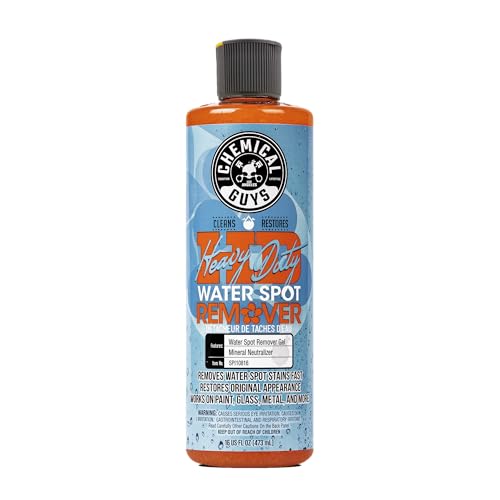
3. Chemical Guys Heavy Duty Water Spot Remover
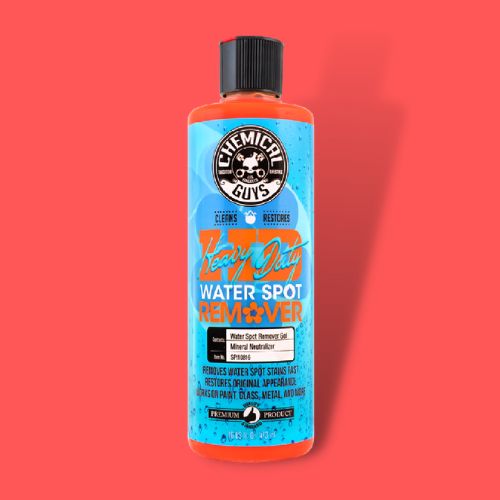
Chemical Guys Heavy Duty Water Spot Remover is my no. 1 recommendation if your car has extremely tough watercress that can’t go away with the use of typical water spot removal products.
It’s also a gel-based product, and its light acidity reacts with water minerals, neutralizes them, and makes them easier to remove. You can use it on painted surfaces, glass, metal, and even plastics.
You can apply it by using a foam applicator pad or by using a clean microfiber towel. Using a foam applicator pad is a better option since you’ll spend less on a product (microfiber cloths soak some of the gel). Furthermore, this product is highly effective, meaning that you’ll be able to remove water spots from tens of cars before you spend the whole content in the bottle.
Best for: Stubborn, etched-in hard water spots that other products can’t handle. This is the heavy-duty option when nothing else works.
Pros
Cons
4. Adam’s Water Spot Remover

Adam's Water Spot Remover is the 2nd cheapest option in this list, just after the Meguiar’s. This is pretty uncommon since Adam’s Polishes often have more expensive products, so I greet this a lot!
This liquid-based water spot remover is safe to use on painted surfaces, glass, and metals, but also on cars with ceramic coatings applied (which is extremely important because ceramic coatings don’t prevent water spots well enough).
The only con of this product is that even though it’s pretty cheap, Adam’s recommends using their waterless car wash product together with water spot remover. So, in the end, it increases the price of the application even though it’s affordable at first.
Best for: Car owners with ceramic-coated vehicles who need a coating-safe formula.
Pros
Cons
5. Hot Sauce Water Spot Remover

Hot Sauce Water Spot Remover is the perfect choice if you’re in search of something that’s safe on waxed vehicles. With each application, it also adds sealant to your car’s paint, making it protected from future water spot appearance.
I like this product because it’s extremely simple to apply. Just spray it, let it dwell, and wipe off the residue. When compared to other products, it’s probably the simplest one to apply and remove.
You can use it on glass, paint, stainless steel, and plastic, but also fiberglass surfaces, making this a great product if you also want to remove water spots from your boat or RV.
Best for: Boat and RV owners, or anyone who wants an easy spray-on, wipe-off solution with built-in sealant protection.
Pros
Cons
Quick Comparison: Which Water Spot Remover Should You Choose?
| Product | Type | Best For | Safe on Glass? | Safe on Ceramic Coatings? | Difficulty |
|---|---|---|---|---|---|
| Meguiar’s A3714 | Liquid/compound | Best overall | Yes | No (check label) | Easy |
| 3D Eraser Gel | Gel | Gel formula fans | Yes | No (check label) | Easy-Medium |
| Chemical Guys HD | Gel (acidic) | Stubborn/hard water spots | Yes (best on glass) | No (check label) | Medium |
| Adam’s | Liquid | Ceramic-coated cars | Yes | Yes | Easy |
| Hot Sauce | Spray | Boats, RVs, simplicity | Yes | No (adds sealant) | Very Easy |
What Causes Water Spots on Cars?
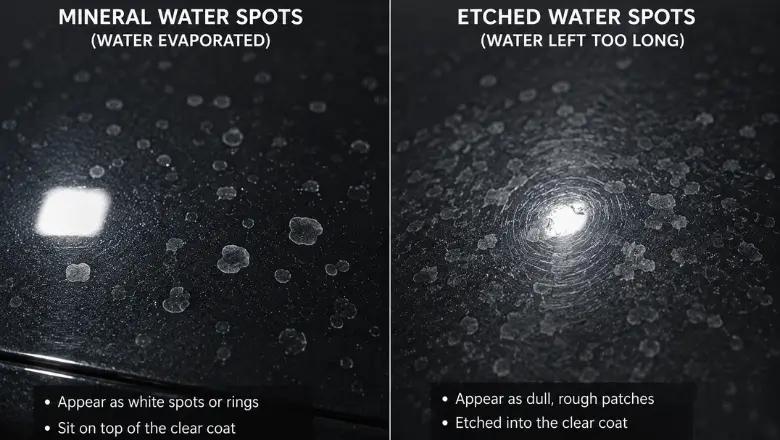
Before spending money on a water spot remover, it’s helpful to understand what you’re actually dealing with. Not all water spots are the same, and the type you have determines how aggressive your approach needs to be.
Water spots form when water evaporates from your car’s surface and leaves behind mineral deposits like calcium, magnesium, and other dissolved solids. The harder the water in your area, the worse the problem will be.
There are three main types of water spots you’ll encounter:
Type 1 — Mineral deposits (surface level). These are the most common ones. They look like white, chalky rings sitting on top of the paint or glass. They haven’t bonded with the clear coat yet, so they’re the easiest to remove. A good water spot remover like Meguiar’s handles these with no issues.
Type 2 — Etching (below surface). When water spots sit on your car for weeks — especially in direct sunlight — the minerals can actually etch into the clear coat, creating shallow depressions. These are harder to remove and often require a more aggressive product like the Chemical Guys Heavy Duty formula, or even machine polishing.
Type 3 — Bonded contaminants. These happen when mineral deposits mix with other environmental contaminants like tree sap, road grime, or industrial fallout. They bond to the paint and require chemical decontamination or clay bar treatment to fully remove.
The most common causes of water spots include sprinkler systems hitting your car, washing in direct sunlight (the water dries before you can rinse it off), hard water from your garden hose, and driving through puddles after rain.
Best Water Spot Remover for Windshield and Car Glass
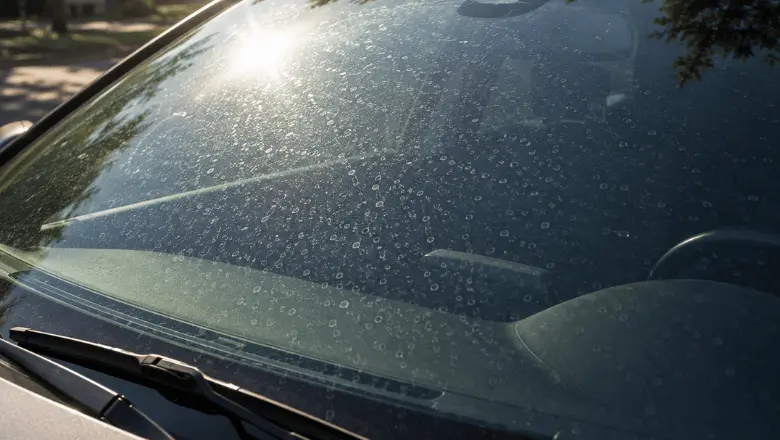
A lot of people search specifically for a windshield hard water spot remover, and I get why — water spots on glass are particularly annoying because they obstruct your visibility, especially when driving into the sun.
From the products on my list, Chemical Guys Heavy Duty Water Spot Remover works best on glass surfaces. Its acidic gel formula clings to vertical glass surfaces without dripping and dissolves mineral deposits effectively. I’ve personally used it on both windshields and side windows with great results.
However, if your windshield has deep, etched-in water spots that have been sitting there for months, you might need a dedicated glass polishing compound or even cerium oxide — a rare-earth polishing compound that professional detailers use for severe glass staining.
For regular maintenance and light water spots on car windows, any of the five products on my list will do the job. Just make sure to follow up with a proper glass cleaner to remove any residue. If you want a full breakdown of how I clean car windows for perfect clarity, I have a separate guide on that.
Pro tip: After removing water spots from glass, consider applying a ceramic coating designed for glass. It creates a hydrophobic barrier that makes water bead and roll off, significantly reducing future water spot formation on your windshield and windows.
Why You Need to Remove Water Spots From Your Car ASAP
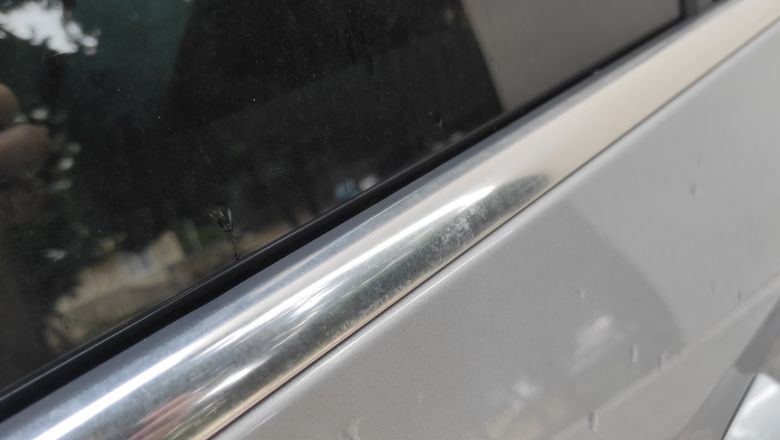
Water spot removers are much more important than you may think. Water deposits on the paint can get extremely stubborn with time, and if not treated quickly, they’ll cause so much harm to your car’s clear coat.
Here’s what actually happens: when water evaporates, the minerals left behind bond with your paint. At first, they sit on top of the clear coat (Type 1 spots). But if you leave them for weeks or months — especially during summer — the heat accelerates a chemical reaction that causes the minerals to etch into the paint (Type 2 spots). At that point, no water spot remover will fix it. You’ll need compounding and polishing, which is far more expensive and time-consuming.
So, it’s better to buy a water spot remover for $20 and get rid of water spots before they destroy your paint. I think that $20 sounds much better than polishing your car with a machine polisher, which takes hours and removes a thin layer of clear coat each time.
The bottom line: treat water spots within 48 hours if possible. The longer they sit, the harder (and more expensive) they are to remove.
How To Use a Water Spot Remover on Your Car (Step-by-Step)
Even though each product requires slightly different usage to get the most out of it, there are a few simple tips you should keep in mind when removing water spots from your car, boat, RV, motorcycle, shower, or anything else.
Follow these steps when removing water spots:
- Wash the car first. Make sure that the surface is completely clean. Any dirt left on the paint can cause scratching when you apply the water spot remover. If you need a refresher, here’s how to wash your car the right way.
- Work in the shade. Never work in direct sunlight. The product will dry too quickly on the surface, making it ineffective and potentially leaving residue.
- Use a soft applicator. Only use soft, paint-safe applicator pads or edgeless microfiber towels. Never use rough cloths or paper towels.
- Apply a small amount of product. Don’t overdo it — a little goes a long way, especially with gel-based products like the 3D Eraser and Chemical Guys.
- Work in small sections. Apply the water spot remover to one small area at a time (about 1-2 square feet). This gives you more control and prevents the product from drying before you wipe it off.
- Let the product dwell for a maximum of 1 minute. Don’t let it dry on the paint — this is crucial. If the product dries on the surface, it can leave its own residue.
- Wipe off the area. Use a clean microfiber towel to buff off the product and reveal the clean surface underneath.
- Rewash your vehicle. Make sure the car is completely clean of any product residue before moving on.
- Apply paint protection. This is the step most people skip. Apply a paint protectant — whether it’s wax, sealant, or ceramic coating — to prevent future water spots from bonding to your paint.
Again, make sure to check detailed instructions on the bottle when you get a certain water spot remover, but always keep the tips I gave you in mind.
How To Prevent Water Spots on Your Car
Removing water spots is only half the battle. If you don’t address what’s causing them, you’ll be fighting the same problem every few weeks. Here’s what I do to keep my car (mostly) spot-free:
Dry your car immediately after washing. This is the single most important thing you can do. When you let water air-dry on your car, the minerals in the water get left behind as spots. Use a quality microfiber drying towel or a blower to dry your car properly after washing.
Don’t wash in direct sunlight. The heat causes water to evaporate faster than you can rinse or dry it, leaving behind mineral deposits. Wash in the shade, in the early morning, or in the late evening.
Apply paint protection. A good wax, sealant, or ceramic coating creates a hydrophobic layer on your paint that causes water to bead up and roll off. This doesn’t fully prevent water spots (no product does), but it makes them much easier to remove and gives you more time before they etch.
Park smart. Avoid parking near sprinkler systems — this is one of the most common causes of water spots. Sprinklers use unfiltered tap water that’s often loaded with minerals. If you can, park in a garage or under a carport.
Use filtered water for the final rinse. If you have access to a deionized (DI) water filter or a water softener, use it for the final rinse when washing your car. This removes the minerals from the water so they can’t deposit on your paint.
Protect your car’s paint comprehensively — a combination of proper washing habits, good drying technique, and quality paint protection products will protect the car paint from water spots and many other forms of damage.
FAQ: Water Spot Removers
Yes, white vinegar can remove light water spots because it’s acidic and dissolves mineral deposits. Mix equal parts distilled white vinegar and water in a spray bottle, spray it on the spots, let it sit for a minute, and wipe off. However, vinegar only works on fresh, surface-level water spots (Type 1). For etched or stubborn hard water stains, you’ll need a dedicated water spot remover like the ones on this list.
They can, yes. Fresh water spots that sit on top of the clear coat are easy to remove and won’t cause permanent damage. But if left untreated for weeks or months — especially in hot weather — the minerals etch into the clear coat and create permanent indentations. At that point, the only fix is machine polishing or, in severe cases, repainting.
For glass surfaces, I recommend the Chemical Guys Heavy Duty Water Spot Remover. Its acidic gel formula is particularly effective on glass because it clings to the surface without running off and dissolves mineral deposits quickly. For extremely stubborn spots on windshields, you might need a cerium oxide glass polishing compound.
Most water spot removers are not safe for ceramic coatings because they can strip or degrade the coating. The exception is Adam’s Water Spot Remover, which is specifically formulated to be safe on ceramic-coated vehicles. Always check the product label before applying anything to a coated car, and when in doubt, contact the ceramic coating manufacturer.
Only when you actually see water spots forming. There’s no need to use it on a regular schedule. If you’re seeing water spots frequently (every few weeks), the real fix is improving your prevention game — dry your car immediately after washing, use filtered water for the final rinse, and apply a quality paint protection product.
Yes, most car water spot removers work on boats and RVs too. The Hot Sauce Water Spot Remover is especially good for this because it’s safe on fiberglass (common on boats) and adds a polymer sealant with each application. Just make sure the product you choose is compatible with the surfaces on your boat or RV — always test on a small, hidden area first.
